Import Guide from China to USA for E-commerce & Dropshipping (2026)
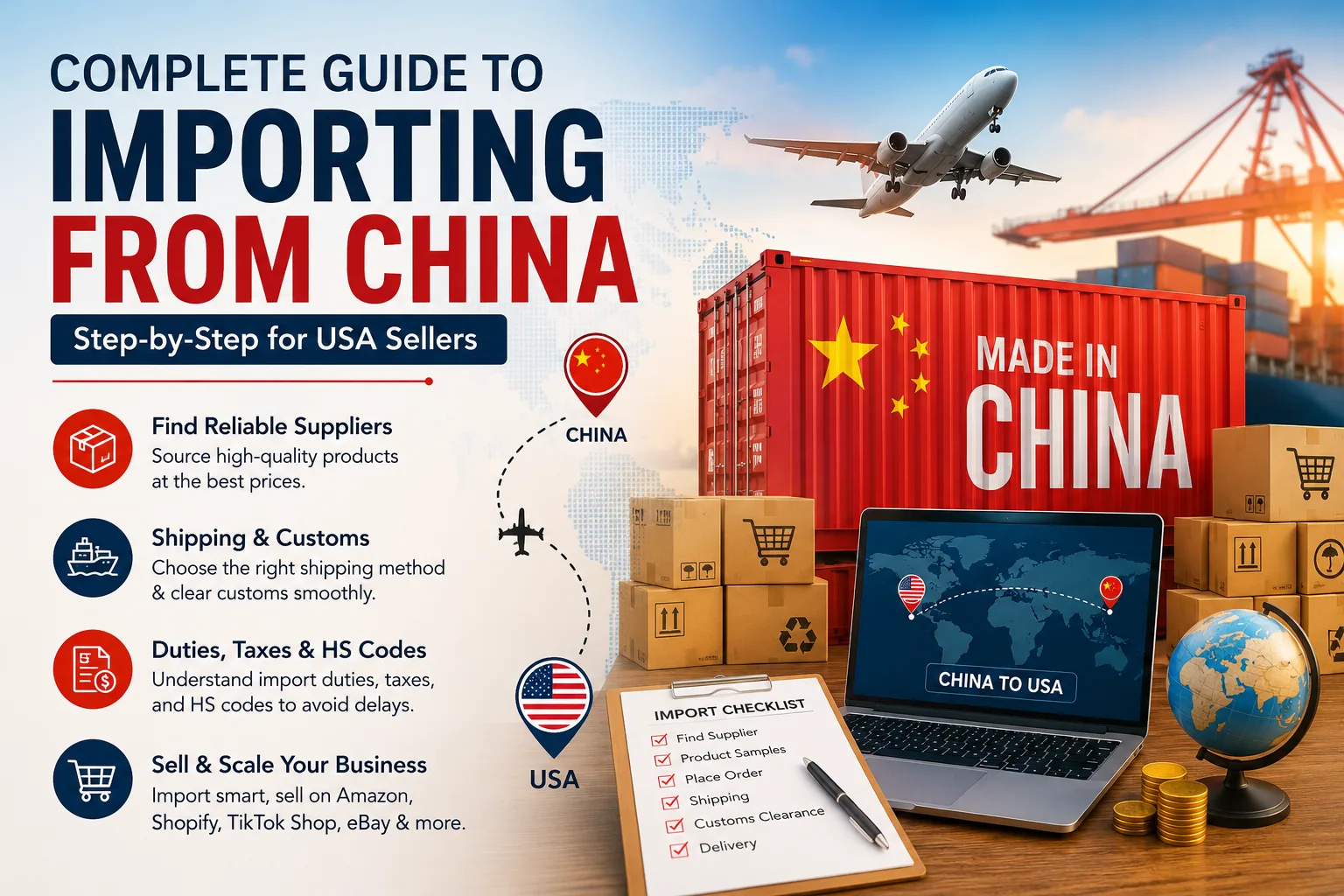
Table of Contents
What Is Importing From China?
Why Import From China?
Import vs. Dropshipping
China to USA Shipping Methods
Customs Clearance, Duties & Taxes
HS Codes Explained
FDA Requirements & Product Certifications
Product Sourcing & Finding Suppliers
Negotiating, Samples & Quality Inspection
Freight Forwarders & Shipping Insurance
Packaging, Branding & Private Label
Selling on Amazon, Shopify, WooCommerce, TikTok Shop, eBay, Walmart
Best Profitable Products to Import
Common Mistakes to Avoid
Pro Tips
FAQs
Latest Import & Dropshipping Updates
What Is Importing From China?
Importing from China simply means buying goods made by Chinese manufacturers or wholesalers and bringing them into the United States to sell. Sellers usually source products through platforms like Alibaba, AliExpress, DHgate, or directly through 1688.com, China's domestic wholesale marketplace.
Unlike dropshipping, true importing usually means you own the inventory, store it (often through Amazon FBA or a 3PL warehouse), and ship it to customers yourself.
Why Import From China?
China remains the world's manufacturing hub for good reason. Here's why so many online sellers source from China:
Lower manufacturing costs compared to most other countries
Massive product variety, from electronics to home goods
Mature supply chains for almost any niche
Flexible minimum order quantities (MOQs) for small businesses
Private label and custom branding options at low cost
Featured Snippet: Is importing from China profitable?
Yes, importing from China can be profitable when you calculate landed cost (product cost + shipping + duties + fees) and price your product with a healthy margin, typically 30–50% or higher after all costs.
Import vs. Dropshipping
This is one of the most common questions beginners ask. Here's a simple breakdown:
Factor Importing (Bulk/Wholesale) Dropshipping
Upfront Investment Higher (bulk inventory) Low to none
Shipping Speed Faster once stocked (especially with FBA) Slower, ships per order
Profit Margins Higher per unit Lower per unit
Risk Higher (unsold stock) Lower (pay as you sell)
Branding Control Full control (private label) Limited
Featured Snippet: Is dropshipping better than importing?
Dropshipping is better for beginners testing products with low risk, while bulk importing is better for established sellers who want higher margins, faster shipping, and stronger branding through private label.
Many successful sellers start with CJ Dropshipping to validate a product, then transition to bulk importing once they confirm demand.
China to USA Shipping Methods
Choosing the right shipping method affects your cost, delivery time, and cash flow. Here's a comparison:
Method Transit Time Best For Cost
Sea Freight 20–35 days Bulk, heavy, low-value goods Lowest per unit
Air Freight 5–10 days Mid-size orders, time-sensitive Moderate to high
Express (DHL/FedEx/UPS) 3–7 days Samples, small urgent orders Highest per kg
Rail Freight 15–25 days Alternative to sea for some regions Moderate
Featured Snippet: Which shipping method is cheapest?
Sea freight is the cheapest shipping method from China to the USA for bulk and heavy shipments, though it takes the longest, typically 20–35 days door to door.
Air Freight
Air freight is a solid middle ground. It costs more than sea freight but ships in days instead of weeks. It works well when you need inventory fast, such as before a holiday sales rush.
Sea Freight
If you're shipping large volumes and can wait a few weeks, sea freight is almost always the most economical choice. Many Amazon FBA sellers use sea freight for their main inventory restocks.
Express Shipping
Carriers like FedEx, DHL, and UPS are perfect for sending product samples or small urgent shipments, though the per-unit cost climbs fast at scale.
Rail Freight
Rail freight is less common for China-to-USA shipping but can be useful for sellers also distributing through Europe or as a backup during peak season congestion.
Customs Clearance, Duties & Taxes
This is where many new importers get stuck. Every shipment entering the USA passes through USA customs, where duties and taxes may apply based on the product type and declared value.
Featured Snippet: How much import tax do I pay?
Import tax in the USA depends on the product's HS code and declared value. Most general merchandise duty rates range from 0% to 25%, with additional Section 301 tariffs sometimes applying to goods made in China.
Import Duties
Import duty USA rates vary widely by product category. A freight forwarder or customs broker can calculate exact rates based on your product's HS code.
Customs Clearance Process
Shipment arrives at a US port or airport
Customs broker files entry documents with CBP
Duties and taxes are assessed and paid
Shipment is released for delivery
HS Codes Explained
An HS (Harmonized System) code is a standardized number that classifies your product for customs purposes. Getting this wrong can delay your shipment or trigger incorrect duty charges. Always confirm your HS code with your supplier or freight forwarder before shipping.
FDA Requirements & Product Certifications
Certain product categories, including electronics, cosmetics, toys, and food-contact items, may require FDA registration or specific certifications (like CPSIA for kids' products or FCC for electronics) before they can legally enter the USA. Always check requirements for your specific product category before placing a bulk order.
Product Sourcing & Finding Reliable Suppliers
Sourcing is the foundation of a successful import business. Common sourcing routes include:
Alibaba, best for wholesale and private label manufacturing
- China's domestic platform, often cheaper but requires a sourcing agent
AliExpress, great for dropshipping and small test orders
DHgate, useful alternative marketplace for smaller MOQs
Temu, useful for product trend research
How to Vet Suppliers
Check business licenses and verified supplier badges
Ask for trade references
Request product samples before bulk ordering
Use third-party inspection services before shipping
Negotiating With Suppliers
Suppliers expect negotiation. Ask about MOQ flexibility, payment terms, and pricing breaks at higher quantities. Building a long-term relationship often unlocks better pricing over time.
Product Samples
Never skip samples. Order at least one sample before committing to a bulk run, even if it costs extra in express shipping fees.
Quality Inspection
Hire a third-party inspection service to check your goods before they leave the factory. This catches defects early, before you've paid for shipping.
Freight Forwarders & Shipping Insurance
A freight forwarder manages logistics between your supplier and your warehouse, handling customs paperwork, consolidation, and carrier booking. Shipping insurance is a small additional cost that protects you against loss or damage in transit, and it's especially worth it for higher-value shipments.
Packaging, Branding & Private Label
Custom packaging and branding turn a generic product into a recognizable brand.
Private label: you design custom packaging and branding on a manufacturer's existing product
White label: you sell a manufacturer's generic product with minimal customization
Private label generally builds stronger long-term brand equity, while white label is faster and cheaper to launch.
Selling Platforms: Where to List Your Imported Products
Amazon FBA
With Amazon Seller Central and Amazon FBA, you ship your inventory to Amazon's warehouses and they handle storage, packing, and shipping. This pairs well with bulk sea freight imports.
Shopify
Shopify gives you full control over your storefront and branding, making it ideal for private label businesses.
WooCommerce
WooCommerce is a flexible, lower-cost option for sellers who want a WordPress-based store with full customization.
TikTok Shop
TikTok Shop is exploding as a sales channel, particularly for trending, visually appealing products that work well in short-form video content.
eBay
eBay remains a reliable marketplace for both new and used goods, and works well alongside Amazon and Shopify as a secondary channel.
Walmart Marketplace
Walmart Marketplace offers access to a massive customer base and is a strong option once you've proven your product on other channels.
For payments, most sellers rely on PayPal or Stripe to process customer transactions securely.
Best Profitable Products to Import
Home organization and storage solutions
Pet accessories
Fitness and wellness gear
Phone and tech accessories
Beauty and skincare tools
Kitchen gadgets
Use our Best Dropshipping Products guide to find current trending picks, and run the numbers through a Profit Margin Calculator before committing to bulk inventory.
Common Mistakes to Avoid
Skipping product samples before bulk ordering
Not calculating total landed cost (product + shipping + duties)
Ignoring HS code accuracy
Choosing the cheapest supplier without checking reviews
Forgetting required certifications for regulated products
Not using shipping insurance on high-value shipments
Pro Tips
Always request a video call or factory video before large orders
Use a sourcing agent for 1688.com purchases if you don't speak Mandarin
Build relationships with 2–3 backup suppliers per product
Track exchange rates with a Currency Converter before paying invoices
Compress product images with an Image Compressor for faster store load times
Use a Barcode Generator for FBA-compliant labeling
Featured Snippet: How do I import products from China to the USA?
To import from China to the USA, find a verified supplier, order and test a sample, agree on pricing and MOQ, choose a shipping method (sea, air, or express), work with a freight forwarder for customs clearance, pay applicable duties, and receive your goods at your warehouse or FBA facility.
FAQs
- Do I need a business license to import from China?
You don't always need a special import license for general merchandise, but you do need an EIN and an importer of record to clear customs.
- What is the minimum order quantity from Chinese suppliers?
MOQs vary widely, from as low as 50–100 units to several thousand, depending on the supplier and product.
- How long does shipping from China to the USA take?
Sea freight takes 20–35 days, air freight 5–10 days, and express shipping 3–7 days.
- Can I avoid import duties?
You can't avoid legitimate duties, but using the correct HS code and shipment value ensures you pay the correct amount, not more.
- Is Alibaba safe for sourcing?
Alibaba is generally safe when you use verified suppliers, trade assurance protection, and order samples first.
- What's the difference between Alibaba and 1688?
Alibaba is built for international buyers, while 1688 is China's domestic platform with lower prices but typically requires a sourcing agent.
- Do I need FDA approval for all products?
No, only specific regulated categories like cosmetics, food-contact items, and certain electronics require FDA registration or approval.
- What's better for beginners, dropshipping or importing?
Dropshipping is generally lower-risk for beginners testing products, while importing suits sellers ready to scale.
- How do I calculate landed cost?
Landed cost = product cost + shipping + customs duties + any additional fees like inspection or insurance.
- What is a freight forwarder?
A freight forwarder coordinates shipping logistics and customs documentation between your supplier in China and your destination in the USA.
- Can small businesses import from China?
Yes, many suppliers accept low MOQs specifically designed for small businesses and startups.
- What products are restricted from import?
Certain items like counterfeit goods, some electronics without certification, and specific regulated chemicals or food products are restricted or banned.
- Should I use a sourcing agent?
A sourcing agent is helpful if you're ordering from 1688, negotiating in bulk, or need on-the-ground factory inspections.
Conclusion
Importing from China to the USA can feel overwhelming at first, but once you understand sourcing, shipping, customs, and platform selection, it becomes a repeatable system. Start small, test with samples, calculate your landed cost carefully, and scale up as you validate demand. Whether you're building a private label brand on Shopify or running an Amazon FBA business, the fundamentals in this guide apply across the board.
Internal Linking Suggestions
Best Dropshipping Products
Shopify Profit Calculator
Shipping Cost Calculator
GST Calculator
Profit Margin Calculator
Currency Converter
Image Compressor
Barcode Generator
External Resources
U.S. Customs and Border Protection (CBP), official import regulations
U.S. International Trade Commission. HS code lookup (HTS database)
FDA Import Program, regulated product guidance
Latest Import & Dropshipping Updates
This section is updated regularly, check back for the newest shipping, tariff, and sourcing news.
Tags: 2026 Import Guide, Updated Today, Latest China Shipping Updates, USA Customs Update, Daily Updated, Trending Products, Trending Imports, Shipping News, Import Regulations, E-commerce Trends, Dropshipping Guide, New Suppliers, China Sourcing News
Call To Action
Ready to start importing? Compare suppliers on Alibaba, calculate your landed cost with our Shipping Cost Calculator, and launch your next product with confidence.